


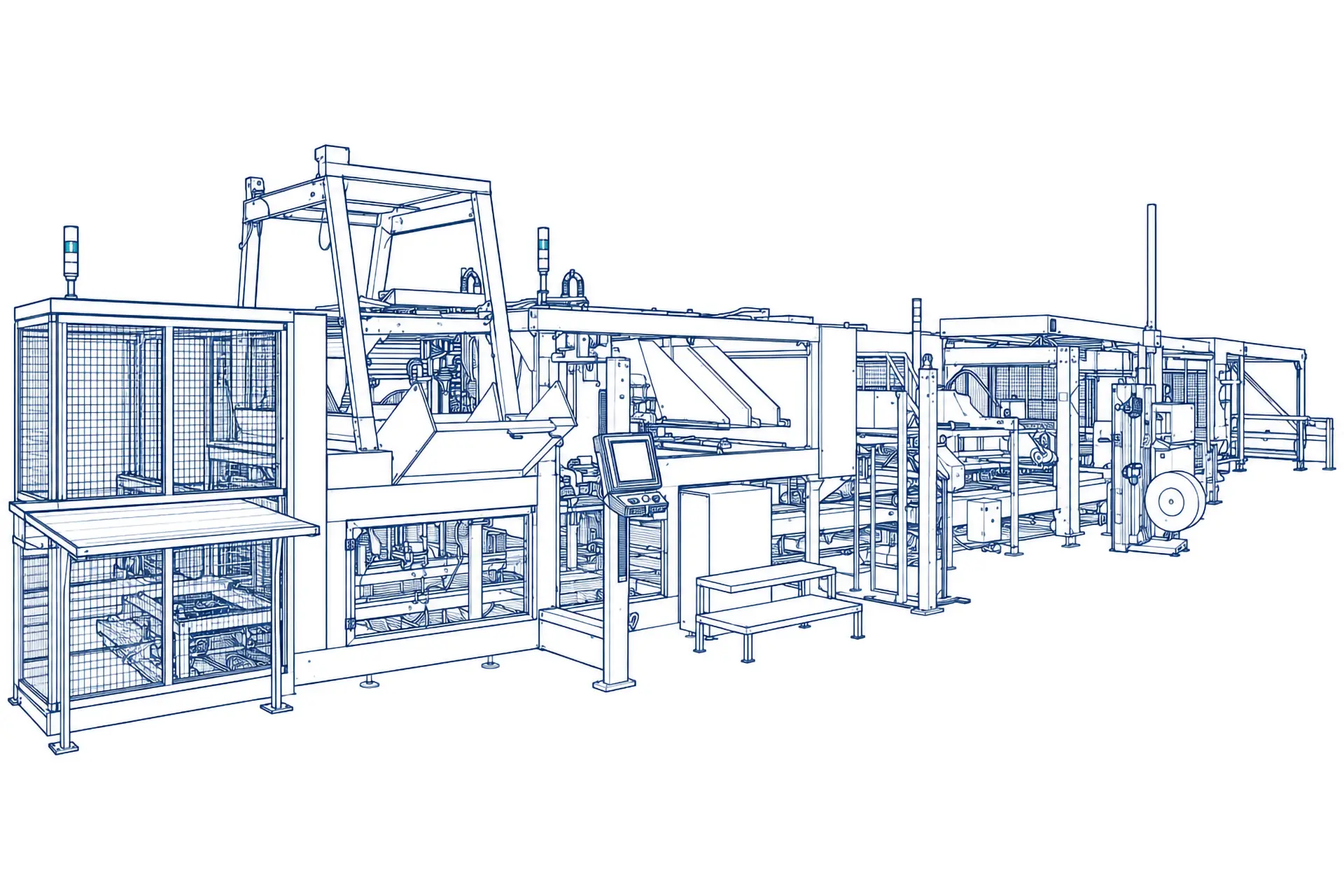
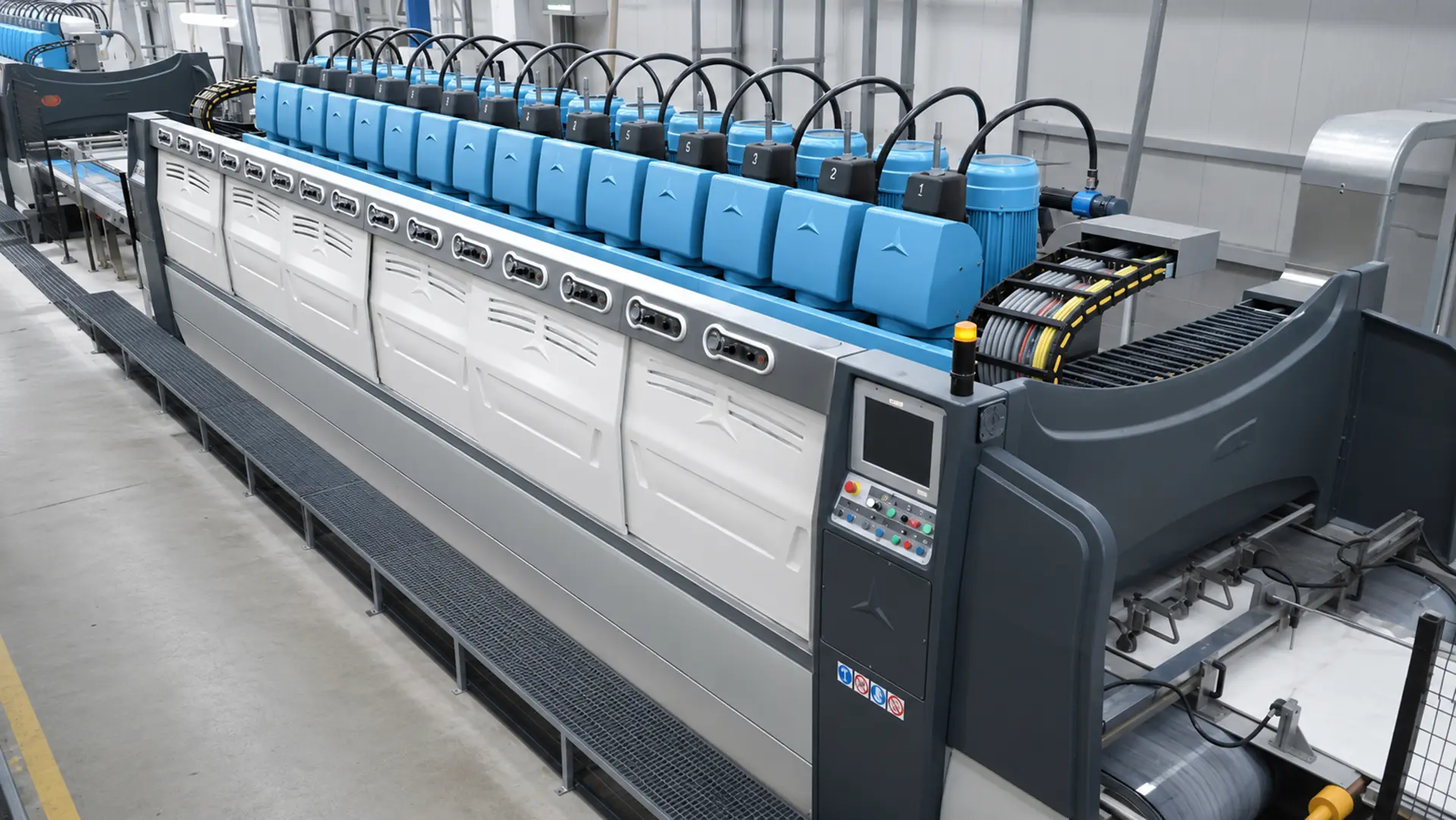
They perform the surface finishing of tiles through abrasive processes that give the desired aesthetic appearance. They can integrate pre-squaring systems, surface treatment, cleaning, quality control and automatic reject ejection.
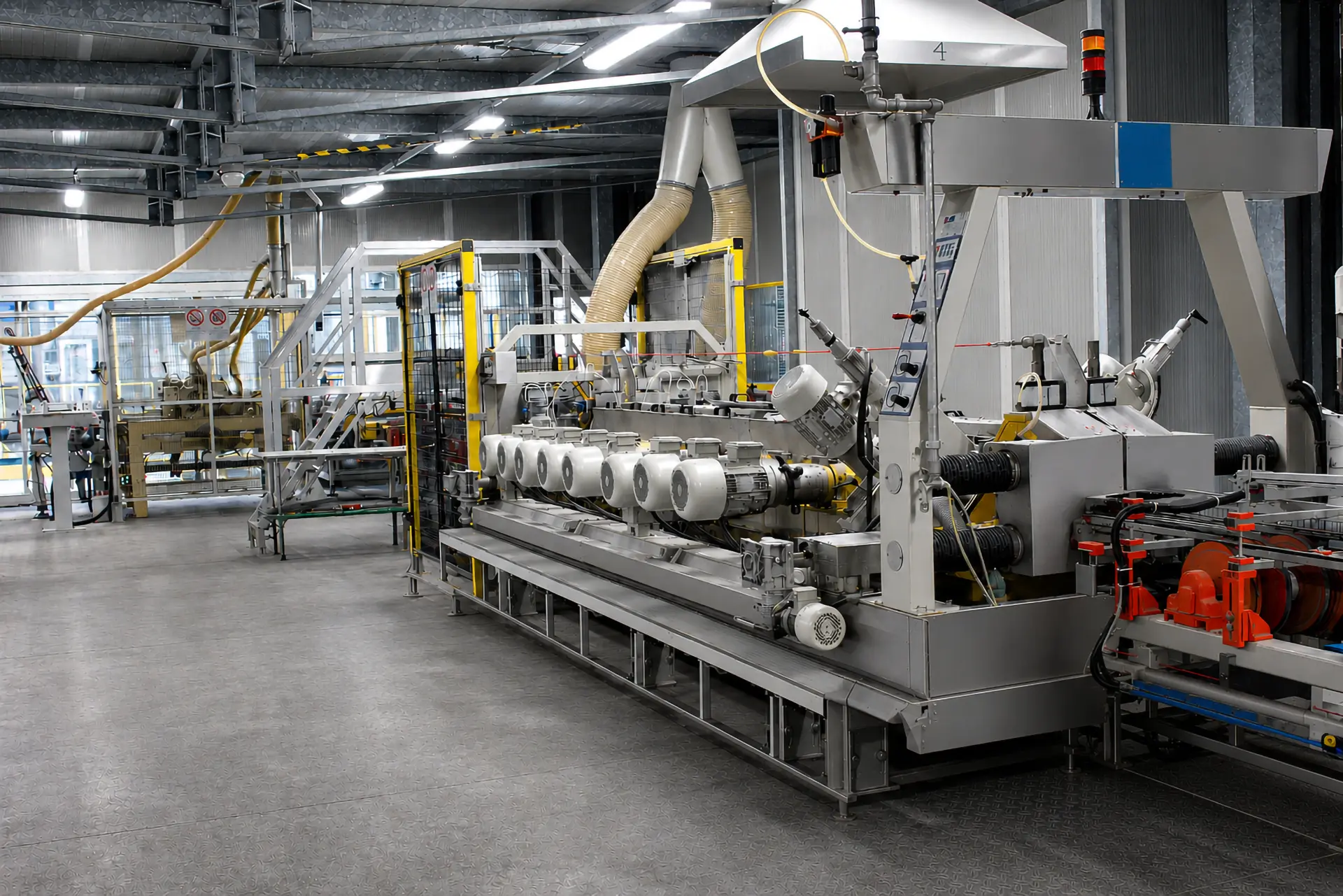
They make it possible to obtain perfectly straight, orthogonal and uniformly sized edges, operating either dry or wet. They may include chamfering, scoring and splitting systems, drying, cleaning and quality control.
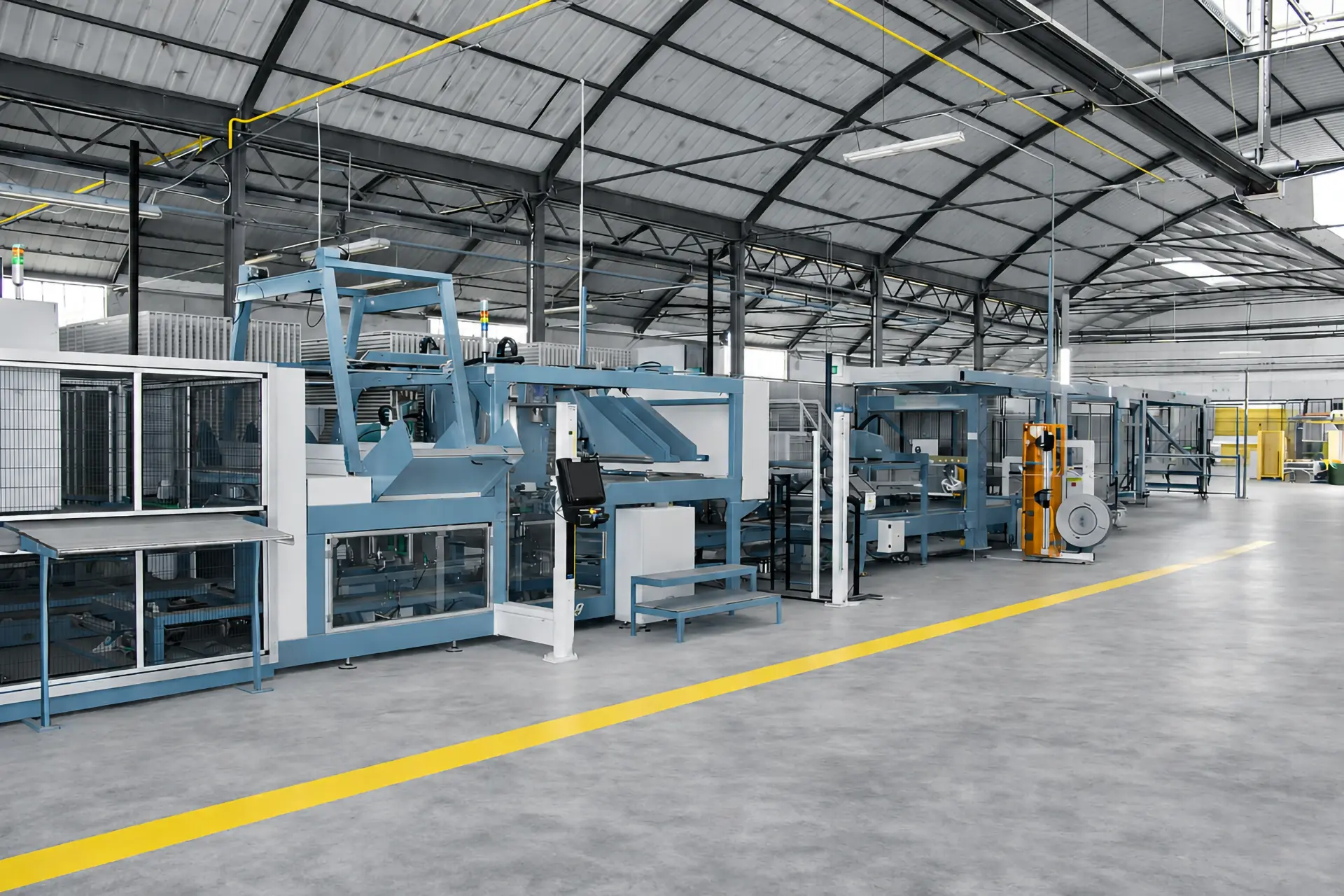
They automate quality-control operations, classification by grade, shade and size, packaging and pallet formation, improving efficiency and traceability of the finished product. They may include cleaning devices, reject ejection, application of protective polymers, marking, labeling, strapping and traceability systems.
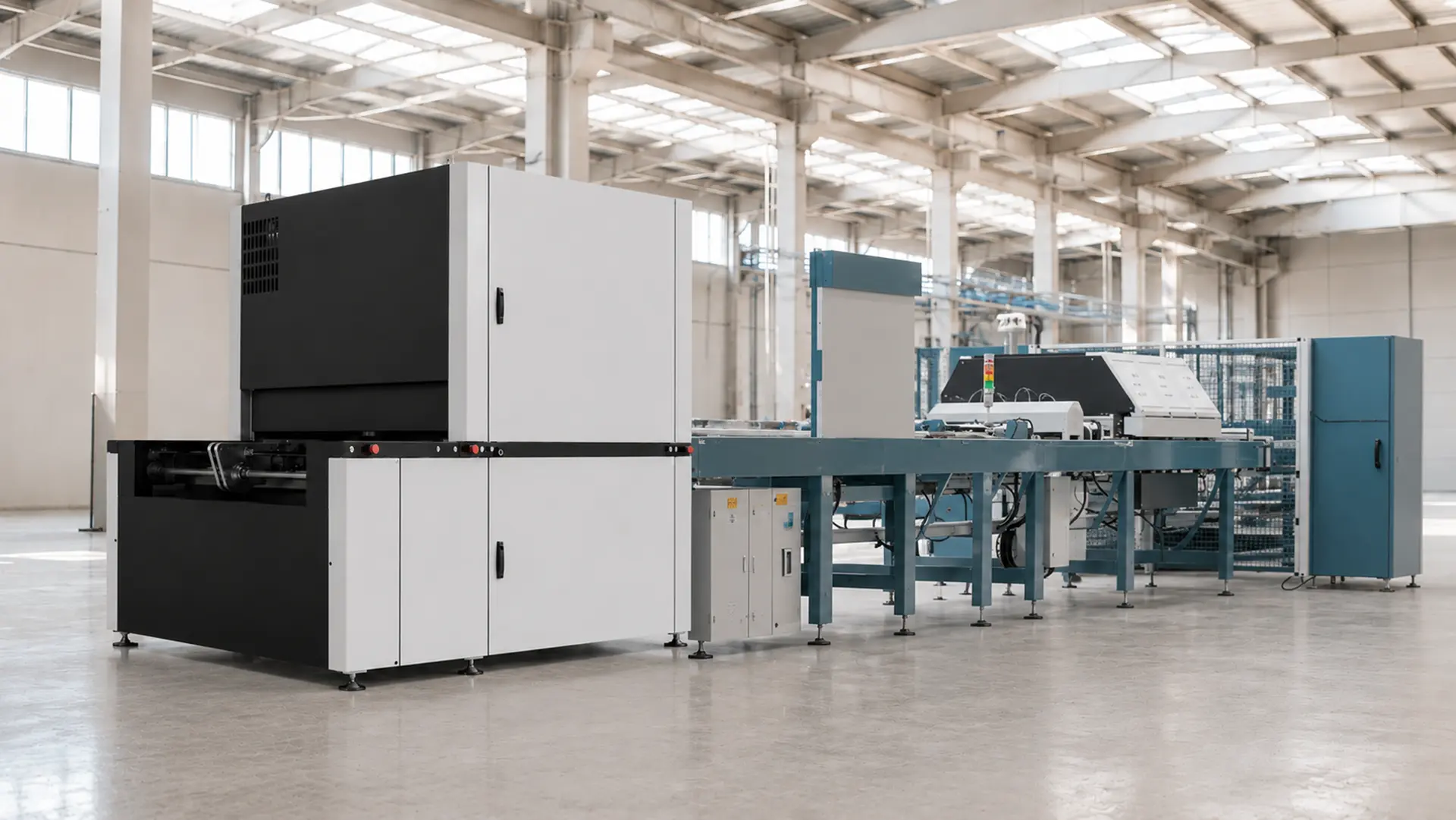
They automatically check dimensional parameters, flatness, thickness, breaking load, edges, corners, surface, decoration and gloss level, helping increase the percentage of first-quality products, reduce human assessment errors and ultimately optimize production costs. Depending on the equipment, they can be positioned in different sorting line departments, from kiln exit through to sorting.
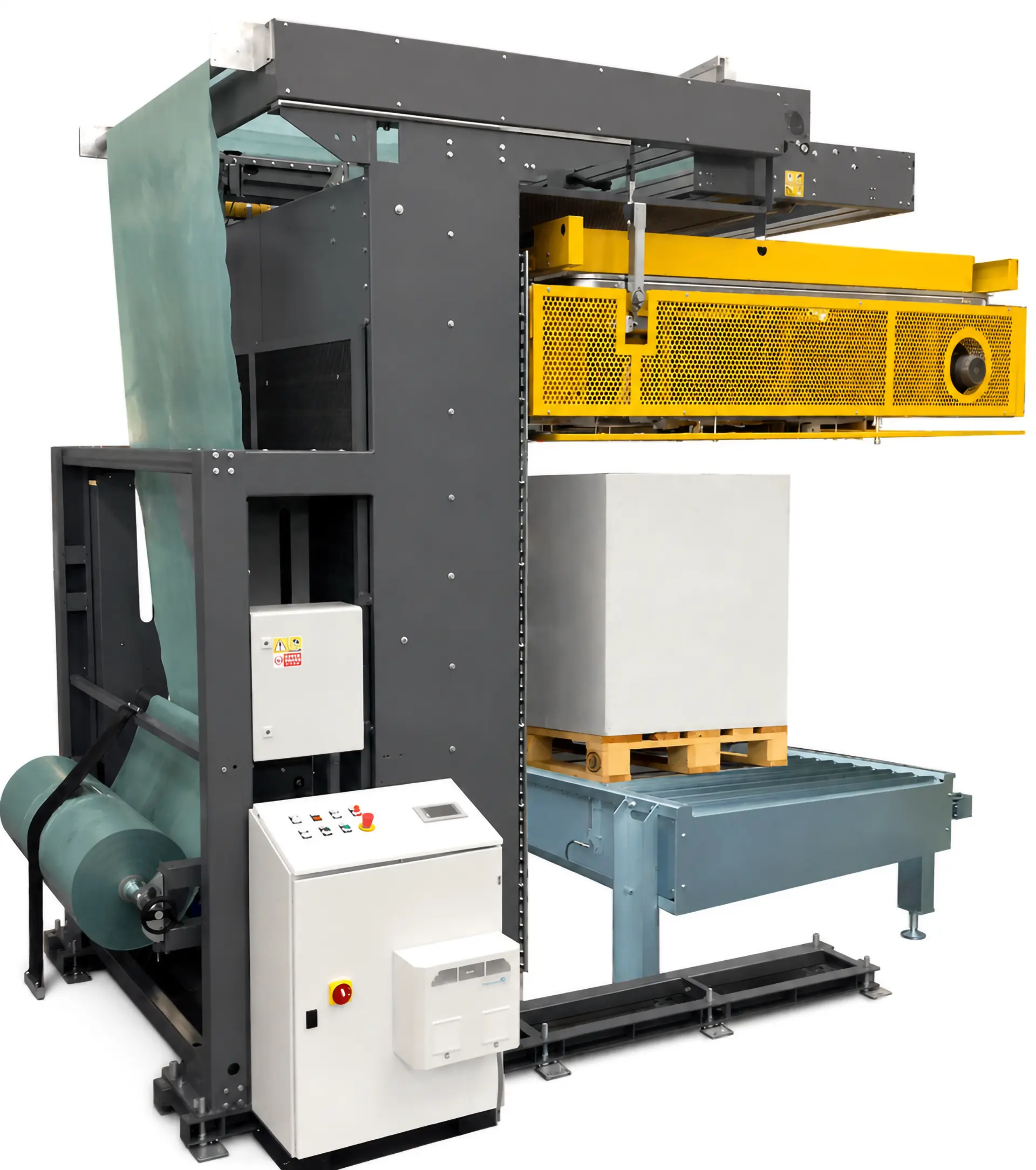
They prepare pallets of finished products for storage and shipment through automatic strapping, wrapping, hooding and shrink-wrapping, and labeling systems, ensuring stability during handling and product protection. They can have different levels of automation and optional accessories.
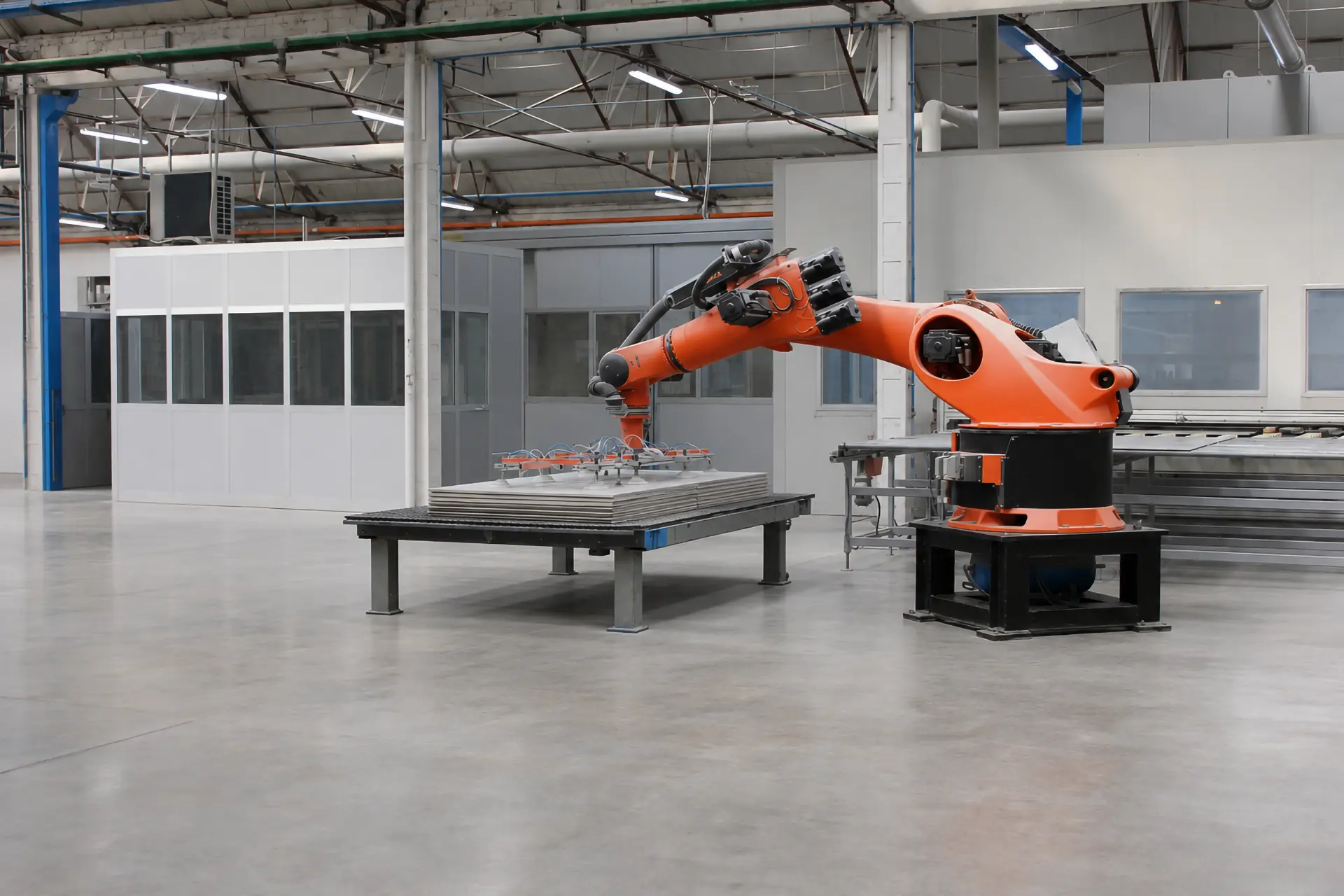
They automate the handling of tiles and slabs between different production stages using grippers, suction cups or vacuum-table systems, ensuring product integrity and cycle speeds suited to the performance required by the line. They can have different configurations to best adapt to the available space, feeding speed, internal logistics needs and productivity.
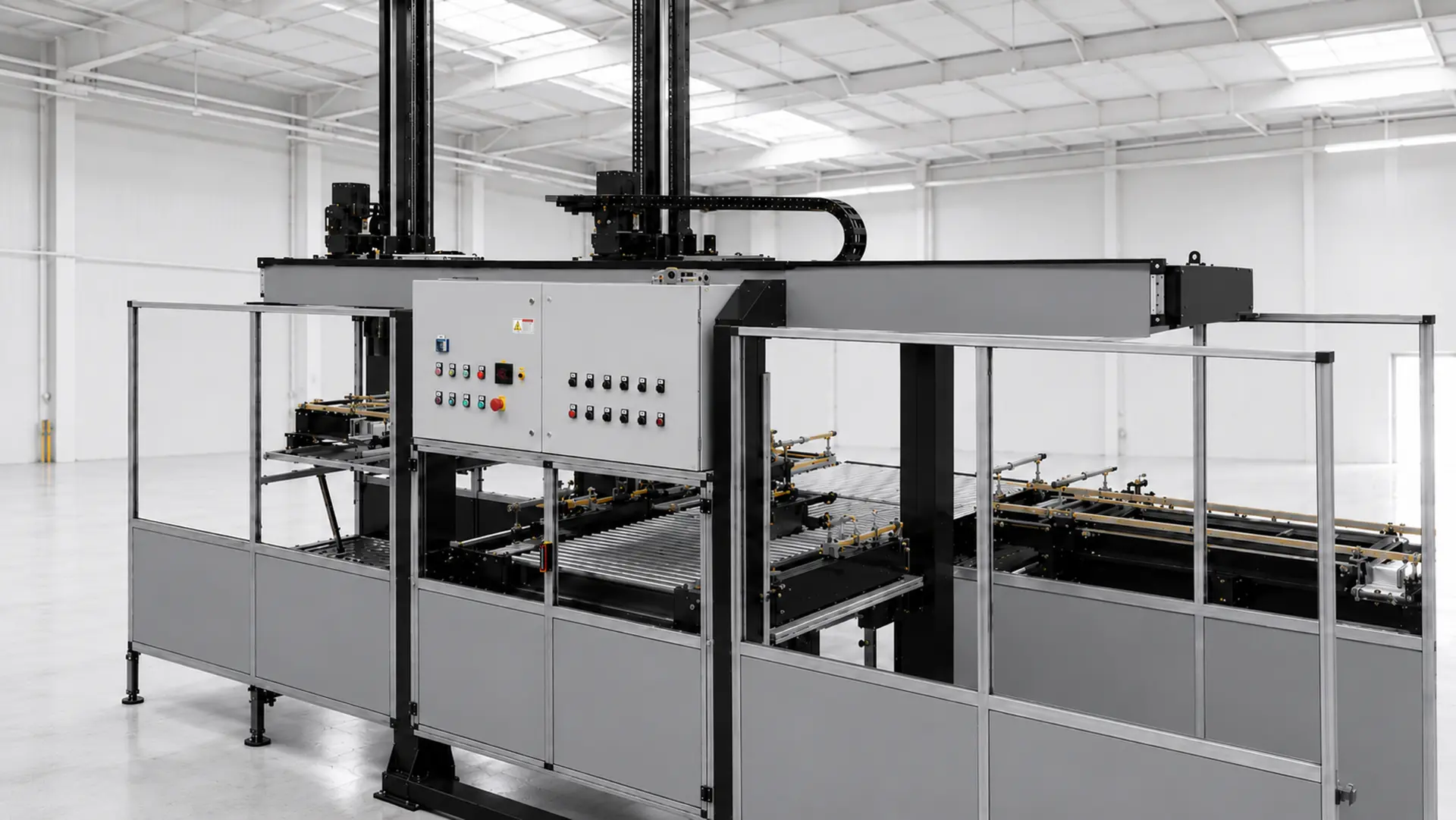
They automatically manage temporary material accumulation during stoppages or changes in production flow, preventing connected lines from stopping and maintaining high process continuity.
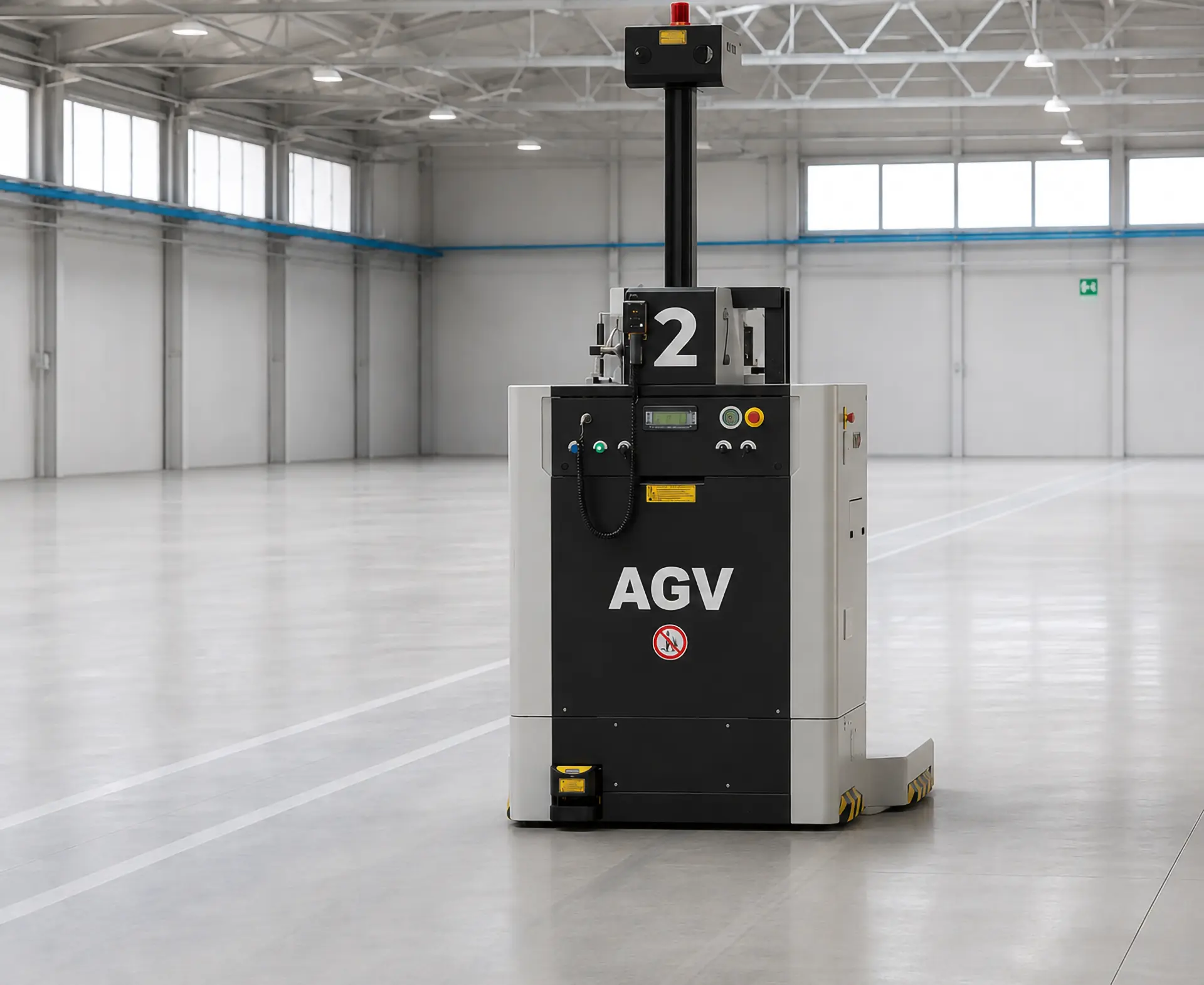
They handle the transport of platforms and pallets between production departments using automatically guided robots. They increase safety, traceability and internal-logistics efficiency while reducing manual handling. They can use laser or magnetic navigation systems with routes that can be customized and modified over time.

Sorting line has been one of Tradeco’s main areas of specialization for years. Our in-depth knowledge of processes, machinery and technologies allows us to support customers not only in choosing the machine, but also in designing and implementing the solution best suited to their plant.

Every project starts with a technical, production and economic analysis. We assess the different available alternatives and identify the configuration that offers the best balance between performance, implementation times and investment. Thanks to our specialization in used machinery from leading Italian manufacturers, we make high-level technologies accessible while maximizing the value of available resources.

When the supply includes reconditioned machinery, every machine is fully overhauled, subjected to functional checks and tested before delivery to ensure operational reliability and reduce commissioning times at the customer’s plant.

From initial consulting to machinery sourcing, from reconditioning to commissioning, through to technical assistance and spare-parts supply, we provide comprehensive support that accompanies the customer through every stage of the project.